Response to Defra consultation on Solid Fuel Burning
Clean Air in London urges the Prime Minister and the Environmental Audit Committee to investigate the government’s failure to fully address wood and other solid fuel burning which bears striking similarities with past public health failures, including the infected blood scandal.
Dear Emma Reynolds
I am writing on behalf of Clean Air in London (CAL) in response to your ‘Consultation on Solid Fuel Burning’ (the Consultation):
https://www.gov.uk/government/consultations/reduce-smoke-emissions-from-solid-fuel-burning
https://consult.defra.gov.uk/domestic-burning/consultation-on-solid-fuel-burning
CAL has campaigned since 2006 for full compliance with the World Health Organisation’s (WHO’s) air quality guidelines throughout London and elsewhere. It works closely with other campaign groups and a wider network of supporters and volunteers to identify and build public understanding of the more important issues and encourage decisive action on them. See: https://cleanair.london/.
CAL welcomes the opportunity to respond to this consultation.
CAL’s previous evidence and communications with Defra
CAL has undertaken a number of investigations into wood burning and written to Defra on many occasions, including information requests under the Freedom of Information Act and the Environmental Information Regulations.
CAL draws your attention particularly to these articles and their many links and attachments:
“Clean Air in London exposes cosy world of the wood stove industry” (1 February 2022)
“Implementation of Ecodesign Regulations from 1 January 2022 is an important step on the path to banning wood burning” (29 December 2021)
“Ban wood burning is urban areas” (22 December 2021)
They form an integral part to CAL’s response to this consultation.
Serious questions remain from those investigations.
Health impacts of wood and other solid fuel burning
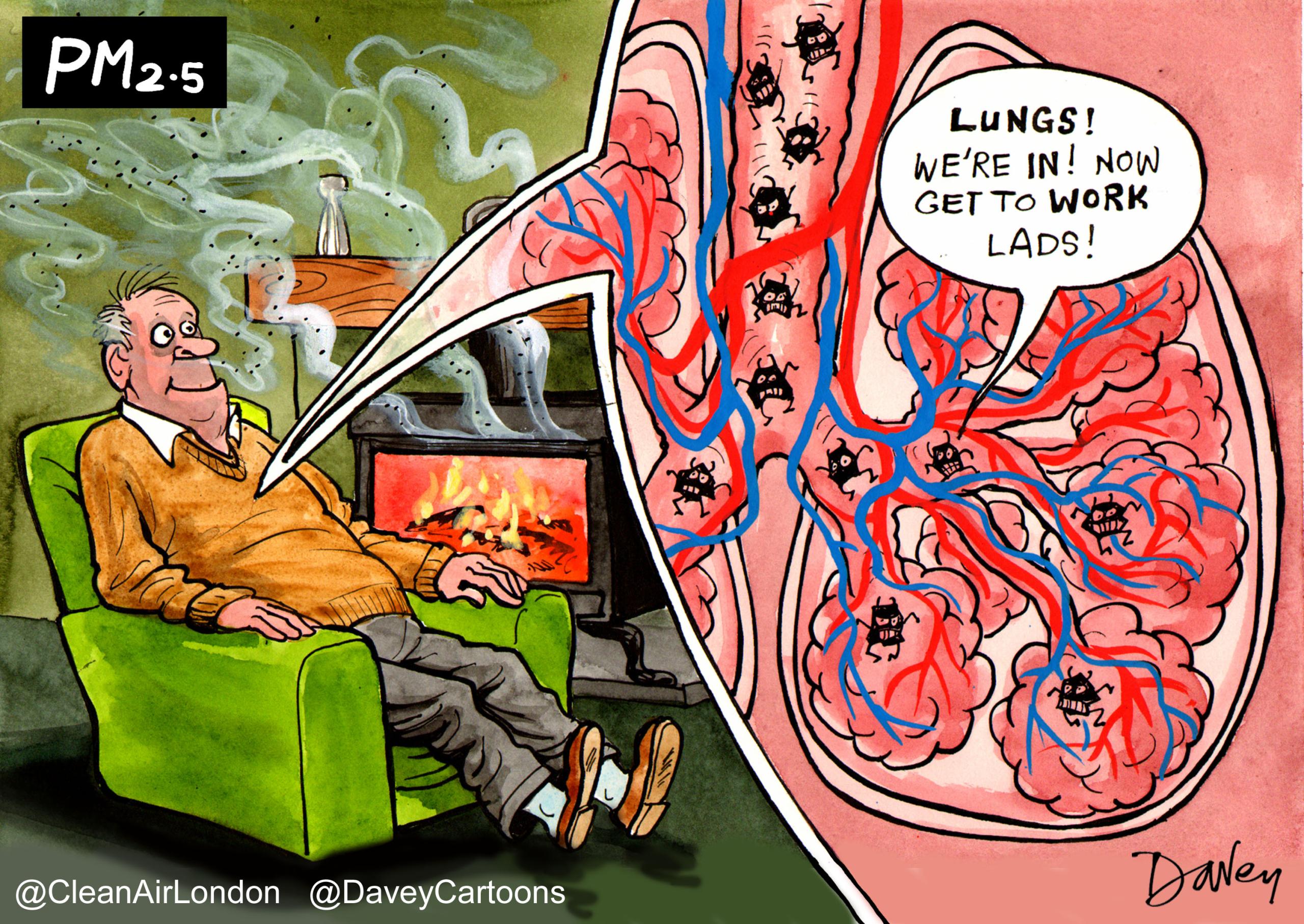
The evidence is now overwhelming that domestic solid fuel burning – particularly wood burning – is a major and avoidable source of harmful air pollution, especially fine particulate matter (PM2.5), for which there is no safe level of exposure.
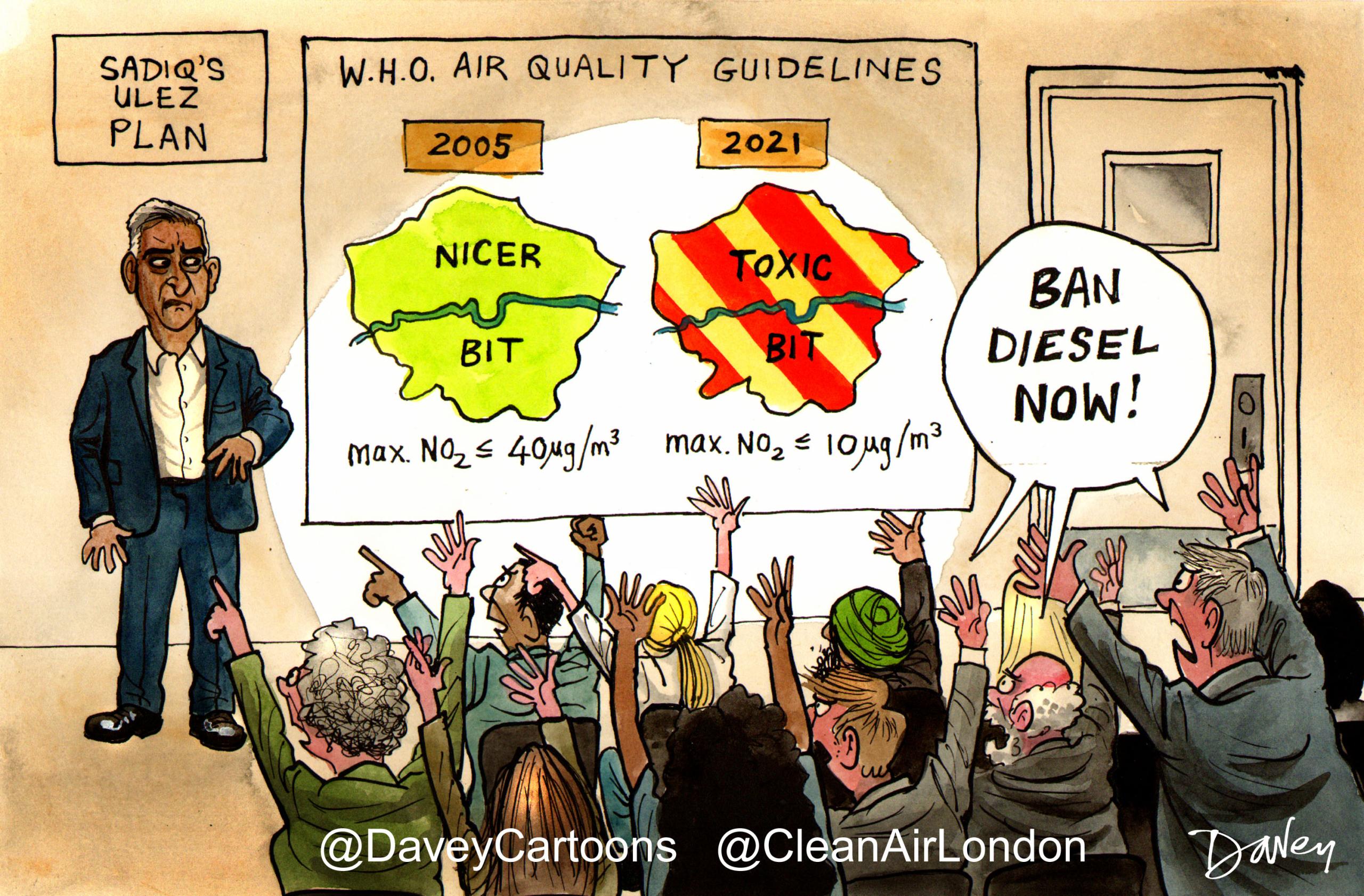
The Consultation acknowledges that the WHO published updated air quality guidelines in September 2021[1] and that wood burning is one of the largest sources of primary PM2.5 emissions[2]. The WHO halved the guideline for PM2.5 and slashed the guideline for nitrogen dioxide (NO2) in 2021.
Domestic wood burning was the second largest source of PM2.5 primary emissions in the UK in 2024, behind road transport[3]. In London alone, it contributes around 15% of PM2.5 primary emissions[4], with measurable impacts on both outdoor and indoor air quality. Exposure to these particles is linked to stroke, heart disease, lung cancer, asthma and dementia, contributing to hundreds or thousands of premature deaths each year[5]. These harms are not confined to those choosing to burn wood, pollution spreads across communities and disproportionately affects children, older people and those with existing health conditions.
In a recent study in Wales, exposure of school children to indoor air pollution was considered and its conclusions support the arguments in favour of phasing out domestic wood burning to protect health and the climate. It found that heating with a wood stove or fireplace tripled the particle pollution breathed by children at home[6].
Similarly, recent research from the USA highlights the high contribution of wood burning to air pollution. Wood is primary heating in 2% of homes but contributes to producing 21% of country’s wintertime particle pollution[7].
Air pollution and climate impacts of biomass burning
CAL is also deeply concerned about the climate impact of wood, biomass and fossil fuel burning. To this end, we exchanged detailed correspondence with the Climate Change Committee (CCC) throughout 2021[8]. The full correspondence can be seen here:
https://cleanair.london/news/ban-wood-burning-in-urban-areas/
See also:
https://cleanair.london/policy/clean-air-in-london-exposes-cosy-world-of-the-wood-stove-industry/
The CCC makes many crucial points that are relevant to your current Consultation:
“[Our] longstanding position on wood burners is that they should not be counted towards with low carbon heat targets or renewables targets”. See their letter dated 8 June 2021:
https://cleanair.london/app/uploads/CAL-405-CCC-letter-to-CAL-June-21.pdf
The exception they make is for biomass boilers playing a role in certain niches (for example, large, hard to insulate rural properties where heat pumps are not viable) (see same letter).
“Prior to the Sixth Carbon Budget advice, the CCC’s advice was already that Government should not support wood burning stoves as part of climate policy, and that their use should be phased out over time.” See page 2 of their letter dated 21 December 2021:
Please also consider the CCC’s 2018 ‘Biomass in a low-carbon economy’ report which, inter alia, covers the CCC’s stance on the role of wood for heat in homes in Table 1 on page 19.
https://www.theccc.org.uk/publication/biomass-in-a-low-carbon-economy/
Please also consider the CCC’s 2019 ‘Net Zero advice technical report’ which describes woodburning stoves as poorly aligned with longer-term best use on page 71.
https://www.theccc.org.uk/publication/net-zero-technical-report/
Please also consider pages 208 and 209 of the CCC’s methodology report supporting the UK’s Seventh Carbon Budget.
Why has the government not followed the CCC’s advice or made a statement to Parliament?
Please see a recent report by the UN Special Rapporteur for a Clean, Healthy and Sustainable Environment titled ‘Priority actions towards breathing clean air, protecting public health and ensuring a healthy environment’ (dated 12 January 2026) which also supports urgent action:
Despite the above, your Consultation documents make no reference to the CCC’s advice. You also seem to include only one mention of greenhouse gases. In our view this is both a failure to include relevant information and a presentation of material which is misleading. In either case, given that the information goes to the heart of a consultation on air quality standards, health and climate change, it is an error which could render decisions based on the consultation unlawful.
It seems to us that the Department has failed to understand that the omission of the CCC’s advice affects the consultation in a way that may not be cured simply by taking that correspondence and comments into account. Consultees should have been given the relevant up to date information in the consultation document.
It seems to us that there are two ways you could now deal with the omission of the information relating
to the Climate Change Committee’s advice. Either:
- there should be a re-consultation with the inclusion of the CCC’s advice with all relevant information on air quality, health and the climate; or
- Defra should follow the CCC’s advice in full and phase out wood burning stoves.
CAL believes that the CCC’s advice should be followed wherever possible.
Domestic wood burning is not a necessity
Crucially, the majority of domestic wood burning is not a necessity. Most households that burn wood have access to cleaner alternatives such as gas or electric heating, meaning this pollution is largely discretionary and therefore preventable. Your own De-Minimis Assessment for this Consultation states “Survey data suggests that approximately 1% of UK households are reliant on solid fuels for their heating, showing that most indoor burning occurs alongside other heating systems rather than as a substitute driven only by affordability pressures”[9].
Even modern ‘Ecodesign’ stoves continue to emit substantially higher levels of PM2.5 than cleaner heating systems, undermining claims that technology improvements alone can resolve the problem.
Past public health failures
This situation bears striking similarities with past public health failures, including the infected blood scandal. In both cases, there is clear evidence of harm, early warnings that were not acted upon decisively and a prolonged delay in implementing protections for the public. As with those affected by the contaminated blood products, individuals exposed to air pollution from domestic burning have often had little knowledge of the risks[10] and no meaningful ability to avoid exposure.
The lesson is clear: where harm is foreseeable and preventable, government has a duty to act decisively. Incremental measures – such as marginally lower emission limits (that are already being achieved), improved labelling or increased enforcement penalties for suppliers (instead of those directly responsible for visible smoke) – are unlikely to deliver the scale or speed or change required. These approaches risk repeating past mistakes by allowing harmful practices to continue under the guise of mitigation.
Action is needed now
Clean Air in London therefore urges Defra to adopt stronger, more precautionary measures including:
- Prohibiting visible smoke from all buildings and installations in England from 1 July 2026 and strengthening the enforcement of smoke control regulations.
- Prohibiting the installation of wood burning stoves in buildings and dwellings within Air Quality Management Areas in England from 1 July 2027.
- Setting limits for real-world emissions of wood burning stoves and solid fuel burning appliances manufactured and sold within England from 1 January 2027 consistent with the human right to breathe clean air and achieving the WHO’s annual mean guideline for PM2.5.
- Amending regulations relating to exemptions of solid fuels and wood burning appliances consistent with the human right to breathe clean air and the WHO’s annual mean guideline for PM2.5.
- Phasing out domestic solid fuel burning in buildings and dwellings in urban areas and within the gas grid by 1 January 2030.
- Delivering, alongside the Department of Health and Social Care, a major campaign that accurately communicates health risks as recommended by the Royal College of Physicians[11] and action that can be taken to reduce emissions.
- Supporting households to transition to genuinely clean alternatives.
- Compensating those who have bought wood burning appliances or been affected by emissions from them.
CAL urges the government to take forward into legislation the Clean Air (Human Rights) Bill[12], known as Ella’ Law, which would address many of the above issues and more. Please remember that we are approaching the 70th anniversary of the first Clean Air Act 1956 on 5 July 2026.
Failure to act decisively on all these points will prolong avoidable harm and increase future health and economic costs. The government now has the opportunity – and responsibility – to prevent future damage and protect public health.
Summary
In summary, CAL urges you to protect public health and follow the advice of the WHO, CCC and UN Special Rapporteur which leaves little or no space for the use of biomass and fossil fuel heating systems.
CAL urges you to address fully the above issues in relation to the Consultation and future policy. Wood should not be used for ‘heat’, except in the most exceptional circumstances. Wood burning stoves should be phased out. Please ensure that your final policies include a specific timetable to phase out these appliances and the burning of wood and fossil fuels in open fireplaces and fire pits.
Please acknowledge safe receipt of this letter. I have copied it to The Prime Minister and The Chancellor given the government’s potential liability for past and ongoing failures and the Chair of the Environmental Audit Committee.
I look forward to receiving your response to this letter.
Yours sincerely
Simon Birkett
Founder and Director
Cc:
The Rt Hon. Keir Starmer MP, The Prime Minister
The Rt. Hon. Rachel Reeves MP, Chancellor of the Exchequer
Toby Perkins PM, Chair of the Environmental Audit Committee
[1] https://cleanair.london/policy/new-who-air-quality-guidelines/
[2] https://www.gov.uk/government/statistics/emissions-of-air-pollutants/emissions-of-air-pollutants-in-the-uk-particulate-matter-pm10-and-pm25
[3] https://www.gov.uk/government/statistics/emissions-of-air-pollutants/emissions-of-air-pollutants-in-the-uk-particulate-matter-pm10-and-pm25
[4] https://data.london.gov.uk/download/2lg5g/2s4/LAEI%202022%20Summary%20Note%20December%202025.pdf
[5] https://www.rcp.ac.uk/news-and-media/news-and-opinion/public-unaware-of-the-health-harms-of-air-pollution-warns-royal-college-of-physicians/
[6] https://www.theguardian.com/environment/2026/feb/06/children-living-homes-wood-burners-exposed-pollution
[7] https://www.theguardian.com/environment/2026/feb/20/wood-burning-air-pollution-premature-us-deaths-study
[8] https://cleanair.london/news/ban-wood-burning-in-urban-areas/
[9] https://consult.defra.gov.uk/domestic-burning/consultation-on-solid-fuel-burning/user_uploads/domestic-burning-de-minimis-assessment-january-2026.pdf
[10] https://www.rcp.ac.uk/news-and-media/news-and-opinion/public-unaware-of-the-health-harms-of-air-pollution-warns-royal-college-of-physicians/
[11] https://www.rcp.ac.uk/news-and-media/news-and-opinion/public-unaware-of-the-health-harms-of-air-pollution-warns-royal-college-of-physicians/