Air Pollution in England: urgent further supplementary evidence on the Government’s failure to issue formal public warnings of hazardous air pollution.
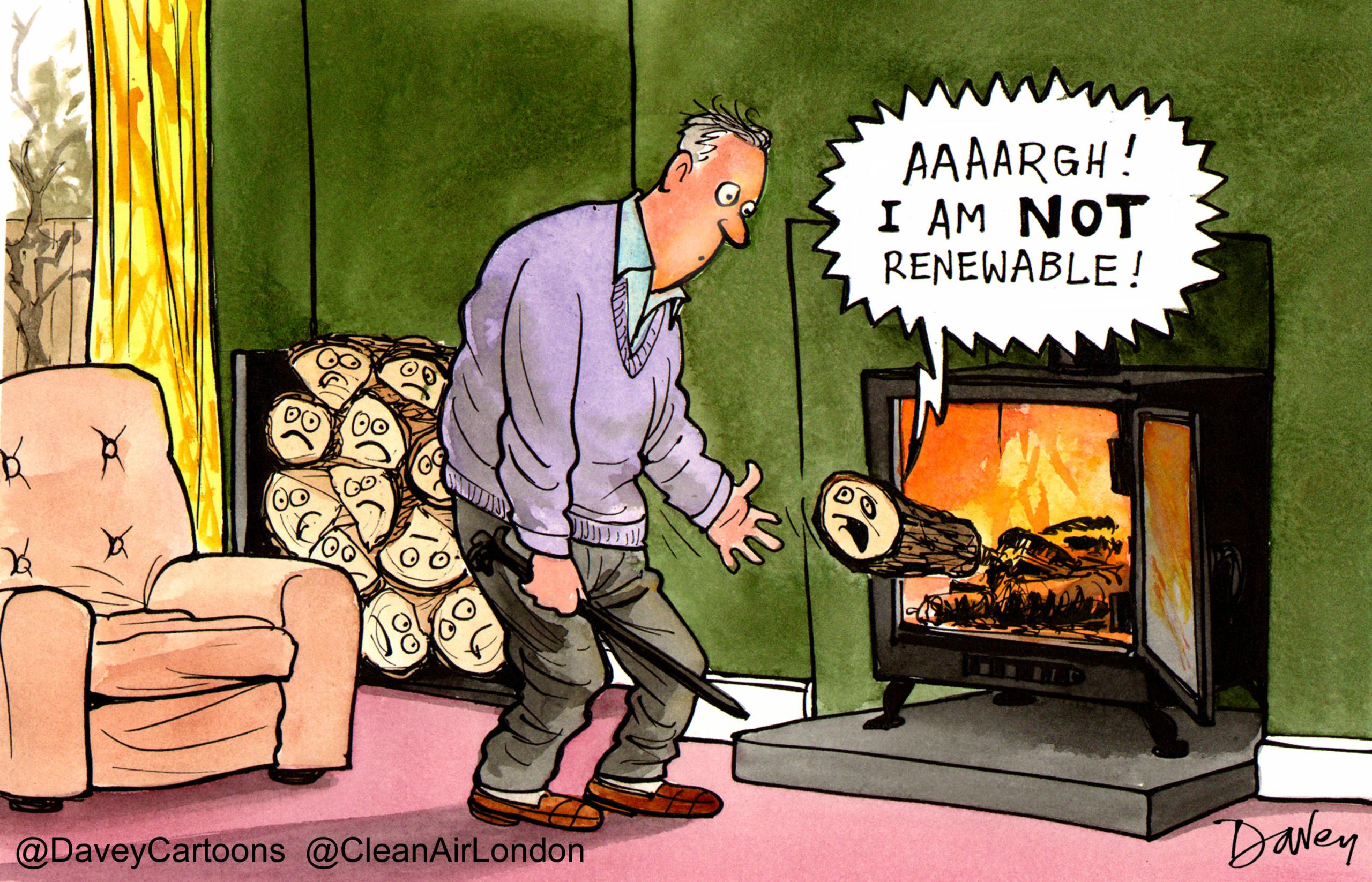
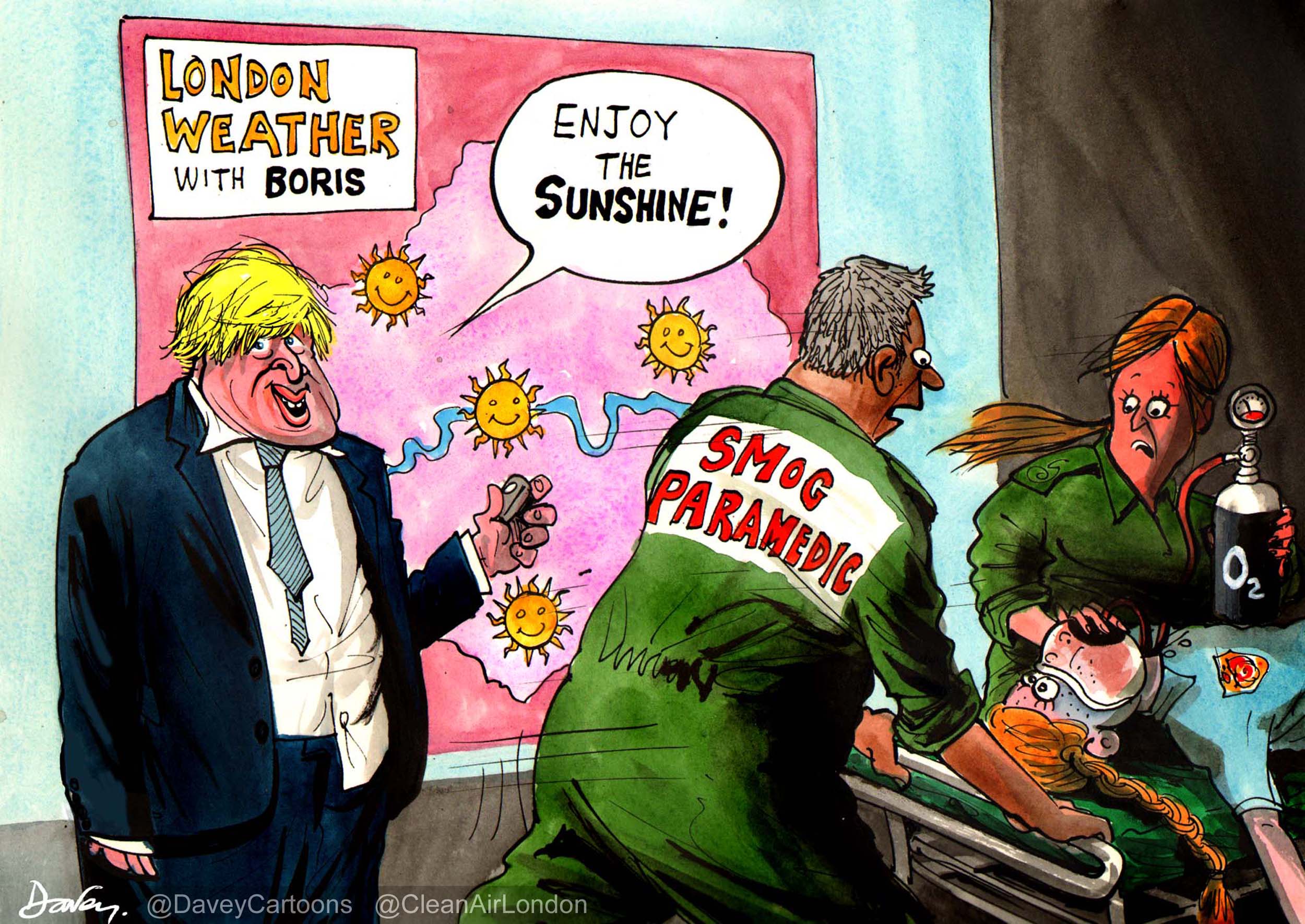
Bonfires/fireworks: Failure to warn despite High (7-9/10) (i.e. Red) and Very High (10/10) air pollution across England on Saturday 7[i] and Sunday 8 November[ii] 2026. London experienced some of its worst air pollution in recent years[iii] – nearly 74 years after the Great Smog.
This Campaign Update is based largely on Clean Air in London’s letter dated 9 November 2026 to Parliament’s Environmental Audit Committee inquiry ‘Air Pollution in England‘.
I write on behalf of Clean Air in London (“CAL”)[iv] to follow up on my earlier letter of 11 October 2026 about the government’s duty to warn all members of the public about air pollution.
At the time of that letter I was informed by the Met Office that the UK did not issue warnings for air pollution in the UK. It is now confirmed through a parliamentary answer that the UK has no system of warning for air pollution in the UK (Mr Gardiner’s UIN 35228 answered on 22 October 2026[v]).
From at least 2006, the government had issued at least nine formal warnings about serious pollution episodes through press releases[vi] or news items. However, it stopped doing so. CAL has now investigated public records, its own archive and received over a dozen further responses under the Freedom of Information/EIR rules to establish, as far as it is able, why no formal warning has been issued about an air pollution episode since 21 April 2011 (when a warning was widely viewed (9,100 page views in the first 30 days))[vii]. That press release is still prominent on GOV.UK’s central ‘News and Communications’ site[viii]. Key issues include:
- Changes in policy and/or practice in 2012 and thereafter
Who approved the change in policy and/or practice in 2012, when and why? A Defra internal email dated 31 May 2012 (attached to RFI 4839 to CAL dated 5 July 2012)[ix] seems to document agreement on a new policy or practice. What is the approval record for the Minister’s answer of 16 April 2012 to parliamentary question 100484[x] which refers to press releases and annual reviews? What changed again after 2014, if it did, and when? Annex 3 provides a summary timeline.
- Did warnings about air pollution reach the public? Is the public record accurate?
Annex 1 identifies a selection of items since 2006, however described, relevant to the duty to warn about air pollution. It identifies nine formal warnings between 2006 and 21 April 2011. Annex 2 suggests ways in which the Committee might establish the facts. For example, were items labelled press releases on 3 April 2012, 25 July 2012 and 5 March 2013 despatched to the news media?
- Wildfire smoke and tropospheric ozone episodes in August 2026
Were the Welsh government and Prime Minister given full information at the COBR meeting on 12 August 2026[xi] about the health effects of wildfire smoke and/or the possibility of tropospheric ozone levels exceeding an “Information threshold” on the following two days (as happened)? If so, what were they told? If nothing, why not? (An FOI response to CAL from the First Minister and Cabinet Office Group confirms they now hold no such information (ATISN 26-0116 dated 4 November 2026). See also Mr Cartlidge’s UIN 36758 answered on 30 October 2026[xii].)
- Festival bonfires and fireworks in November 2026 – nearly 74 years after the Great Smog
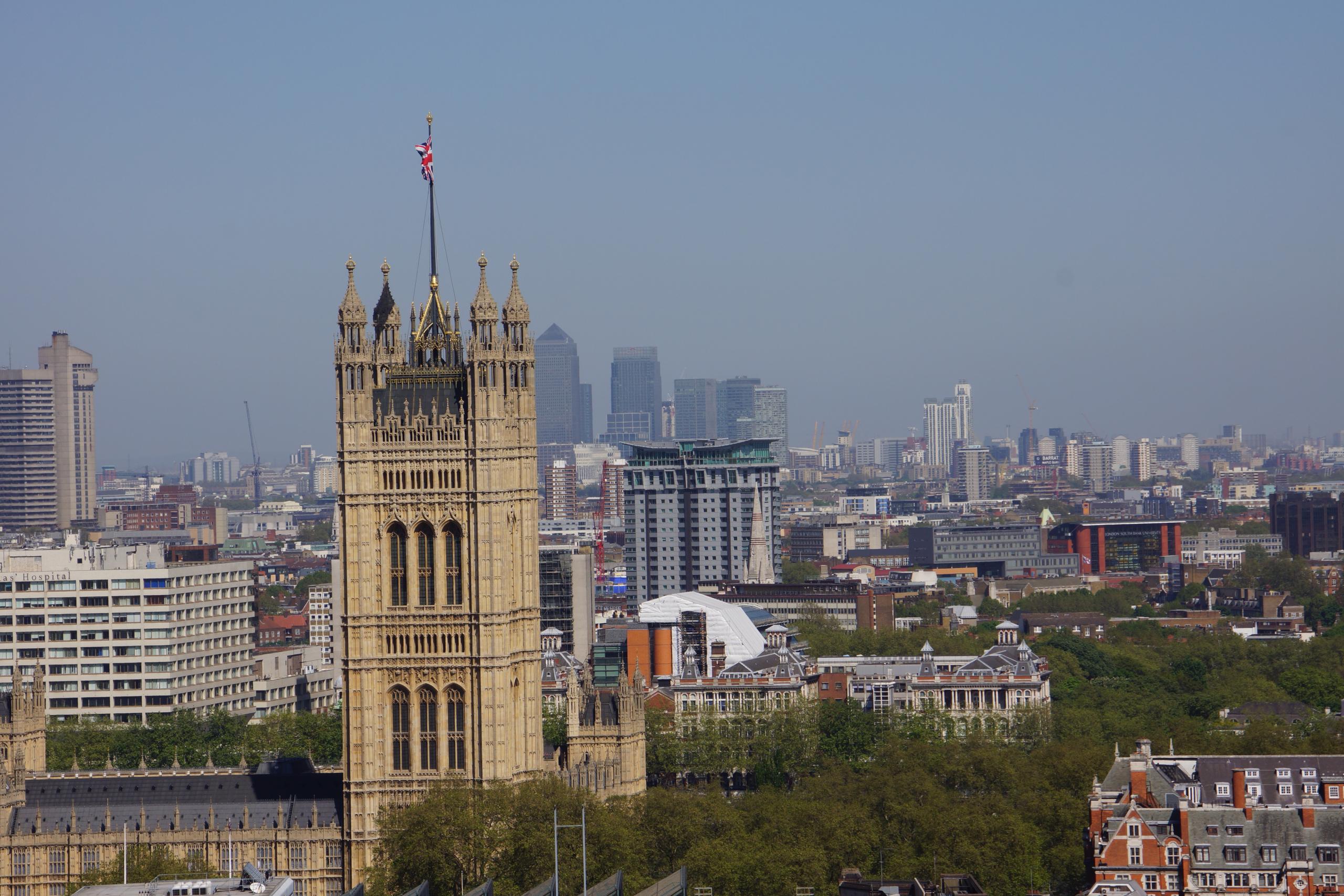
England experienced an Extreme air pollution episode over the weekend of Saturday 7[xiii] and Sunday 8 November[xiv] 2026 when bonfires and fireworks, in cold, calm and foggy conditions, caused High (7-9/10) (i.e. Red) and Very High (10/10) (i.e. Purple) air pollution. London experienced some of its worst air pollution in recent years – nearly 74 years after the Great Smog[xv]. By 3pm on Sunday 8 November 2026, 17 official monitoring stations in the UK were reporting Very High 10/10, 40 High and 56 Moderate air pollution[xvi]. What proactive warnings were sent to the general public about air pollution between 4 and 9 November 2026? If none, why not? If they were sent, then to whom and what did they say? Was the Prime Minister fully warned? If so, what was his response?
In essence, Defra disclosures between March and June 2012 reveal a deliberate decision to move from issuing a warning before the first high Summer smog ozone episode (one of which had attracted a great deal of media attention over Easter in April 2011) and another before Bonfire Night to a system of posting ‘seasonal advice’ that would attract much less media attention online in February/early March each year. This new approach should “perhaps not [be] over the Easter Weekend” (Defra internal email dated 22 March 2012 attached in RFI4789 addressed to CAL on 13 June 2012) and involve the Press Office’s Twitter feed only when air pollution is ‘Very High’ (“around 10-15 days a year which is more appropriate”) rather than ‘High’ (“on around 50 days a year” – “too high”) (Defra internal email dated 4 May 2012, RFI4789). A Defra email dated 31 May 2012 titled “Re: Publicising High Ozone Levels” (Defra letter dated 5 July 2012, RFI 4839) describes agreement on the new arrangements[xvii]. But even this policy and/or practice seems to have been dropped after March 2014. Use of the words ‘warn’ and ‘warning’ for any specific air pollution episode ceased after 21 April 2011 in Government ‘News and communications’[xviii] and on Defra UK Air News[xix] e.g. among ‘Information Bulletins‘[xx].
Seasonal (ozone) advice was published on 3 April 2012 (with 523 page views in the first 30 days) (RFI4781). A (last) ‘one-off’ notice of High ozone on 25 July 2012 was “actively distributed only to Defra contacts at the HPA, DfT, DH and GLA” i.e. not news media. It received just 273 page views despite being labelled ‘Press release’. (See RFI4921 dated 23 August 2012.) The policy or practice of issuing seasonal advice (as opposed to first episode advice) seems to have become confused by 5 March 2013[xxi] when Defra referred to a specific episode and was dropped after March 2014 (with odd exceptions in April 2015 and January 2017). It is unclear whether official policy/practice changed after 2014 i.e. for the second time. Seasonal advice is different to warnings about a specific air pollution episode.
The evidence suggests that successive governments have systematically avoided providing a frank account of their practices in relation to warning or information about air pollution, including to Parliament. For example, Parliament has been told “The arrangements [for the issue of press releases] date back more than 14 years and span successive Governments and changes to departmental processes. It has not been possible to identify records establishing who made the change referred to, or any dated decision records for publication.” (UIN 38441 answered 2 November 2026[xxii]). Evasive answers to Parliamentary questions are consistent with CAL’s experience over nearly 20 years.
The evidence that CAL is sharing suggests that, not only does the government currently fail to issue formal warnings for air pollution but also that since 2012 successive governments have deliberately and systematically failed to warn the public about air pollution – whether through press releases or news items despatched to the news media – even though such warnings are essential to the protection of life and health and/or required by law. Please ask relevant government departments not to destroy evidence about these issues. A forensic investigation is justified.
The gravity of the failure to warn is obvious. Since 2011 there have been thousands of early deaths attributable to air pollution. CAL estimates that there have been several thousand such deaths nationally in total during air pollution episodes or their aftermath since 2011 (e.g. Baroness Jones of Moulsecoomb’s UIN HL4795 answered on 2 February 2017)[xxiii]. If there has been a deliberate decision not to provide effective warnings and/or to misreport government practice in relation to warning the public and/or an omission to include information about air pollution in related warnings (e.g. wildfires or bonfires and fireworks) then the failures are scandalous as well as serious, contribute to more early deaths and stand in the way of developing an effective system for protecting public health.
Although, as promised in response[xxiv] to the Prevention of Future Deaths Report, the Department now claims to have carried out a comprehensive review of the Air Quality Information System (“AQIS”) [xxv] it has not done so. “The purpose of the [AQIS] Steering Group will be to provide direction and oversight for a programme of work considering the effectiveness of the current air quality information system...[xxvi]” [My emphasis]. It is also significant that the government refused to carry out a public consultation as part of its recent review despite requests to do so (Defra letter to CAL dated 16 January 2025 (Their ref: PO2024/24878/NA) and Mr Farron’s UIN 31779 answered on 3 March 2025[xxvii]). There has therefore been no review of the relevant period during which policy and/or practice changed.
The intensive search of public records and its own archive that CAL has now carried out suggests, at best a lack of openness about air pollution and about departmental practices and at worst a deliberate effort to cover them up.
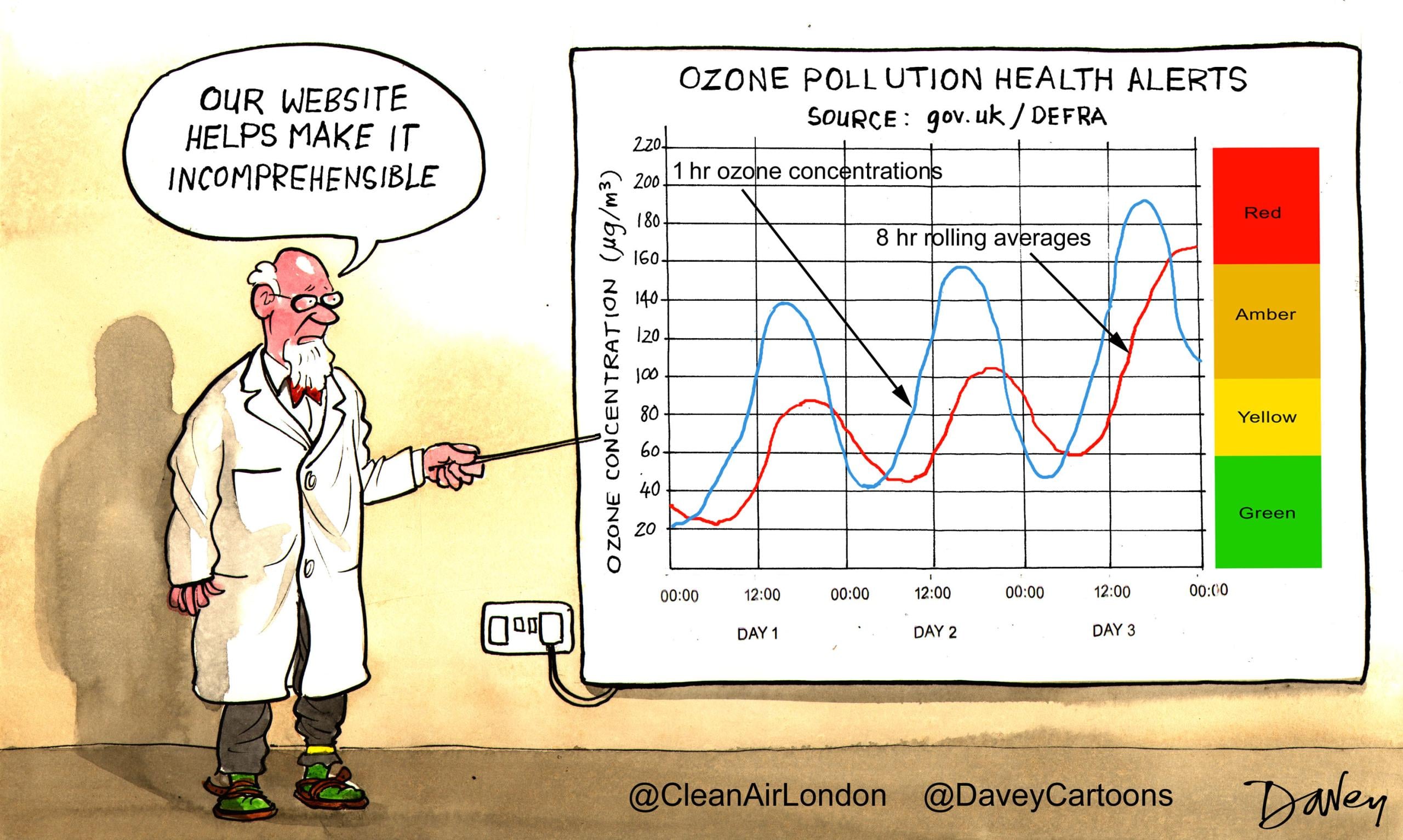
In the circumstances, which suggests Defra’s reluctance to reveal the true extent of air pollution, CAL urges the EAC to recommend that the job of warning the public about air pollution is given to the Met Office as an Executive Agency of the Department for Business, Innovation, Science and Trade with oversight from the Public Weather Service Customer Group. Its remit for warnings should cover all forms of air pollution (except urban streets and incidents), including: particles and tropospheric ozone; and anthropogenic (including festival bonfires and fireworks) and natural sources such as volcanic dust and gases, Saharan Dust, wildfires etc. Warning bands should align with other weather warnings and use the Red, Amber, Yellow and Green framework. Action plans across sectors and cities and regions should be taken forward as they are being for heatwaves[xxviii] and wildfires. Practice in France offers excellent examples of mitigation and adaptation measures[xxix] and for sporting events (that have included the Paris 2024 Olympics)[xxx].
The Committee is reminded that there is no safe level of air pollution and everyone is potentially susceptible to its effects; restricting information to a small group of subscribers who are already aware of the ill effects is therefore inadequate and ineffective. The need to change the UK’s approach to air pollution and the protection of its citizens is important and urgent.
I would be pleased to share this letter with the Rt. Hon. Alistair Carmichael MP as it may be relevant to Efracom’s inquiry into ‘Climate adaptation and emergency response’[xxxi].
Yours sincerely
Simon Birkett
Founder and Director
Enc.
*********************************************************************
Notes added subsequently (last updated 21 November 2026)
- Contact at https://cleanair.london/contact/.
- This posted version corrects typos in letter dated 9 November 2026 and reference to Defra email of 31 May 2012 which was attached to RFI 4839 (5 July 2012) not RFI4789 (13 June 2012). It adds links to selected public sources.
- ff
- WhatDoTheyYou – Simon Birkett’s Freedom of Information and EIR requests
- ff
- f
********************************************************************
Annexes in CAL’s letter dated 9 November 2026 continue below.
Annex 1
A selection of items, however described, relevant to the duty to warn about air pollution
Issued by Defra
9 June 2006 (formal warning), 3 July 2006 (formal warning), 17 July 2006 (formal warning), 3 November 2006 (formal warning); 27 April 2007 (formal warning); 2 November 2007 (formal warning); 9 May 2008 (formal warning); 1 June 2009 (formal warning); 21 April 2011 (formal warning); 8 November 2011; 3 April 2012; 25 July 2012; 5 March 2013; 14 March 2014; 17 and 18 September 2014; 8 to 12 April 2015; 23 and 24 January 2017; and 7 May 2018.
Issued by Health departments or agencies
23 and 24 May 2011; 22 January 2013; 2, 3 and 4 (twice) April 2014; 23 and 24 January 2017; 21 June 2017; 28 June to 16 July 2018; 14 June to 12 August 2022; and 14 July 2026.
Public health advice following the Grenfell Tower fire was published between 21 June 2017 and 24 September 2019.
[Editor (21/11/26): Note that a number of the above have appeared at times with different titles, classifications and/or weblinks. Several were ‘withdrawn’.]
Annex 2
Did “warnings” about air pollution reach the public? Is the public record accurate?
Event: Was it the first HIGH summer smog of the year, first exceedance of an ozone ‘Information (or Alert) Threshold’, Bonfire Night, seasonal advice (e.g. Spring), Saharan dust, volcanic dust, wildfires or something else. When?
Warning: Was a warning or other item about an air pollution episode published?
Web posting: Where was it published e.g. with press releases or as an Information Bulletin? Defra’s letter to CAL dated 8 June 2012 explained the difference between press releases and (passive) information bulletins (Defra reference: RFI4781)[xxxii].
Label: How was an item labelled or categorised as a (i) press release, (ii) news story, (iii) blog, (iv) Information Bulletin or (v) something else?
Reclassified press releases: Were items subsequently reclassified as a press release (e.g. during migration to GOV.UK) and/or referred to in Parliament as press releases i.e. changed subsequently? Press releases are the most prominent of communications.
Public record: Were items, labels, categories or records withdrawn, destroyed, recategorised on migrated webpages or otherwise changed?
Press office: Importantly, what were the exact press office editions relied on, approved and despatched to news media? Communications from the Press Office are usually approved by a Chief Press Officer and checked for factual accuracy with policy colleagues (see RFI4781).
Webpage and media hits: How many unique visitors viewed each original webpage in the first 30 days? What news media coverage was there?
Annex 3
Summary timeline (my emphasis)
2006-2009 Defra published news releases with formal warnings about summer smogs and Bonfire Night smogs in 2006 and 2007 and first summer smogs in 2008 and 2009 (see Annex 1).
21 April 2011 Formal warning – Press release (Defra): ‘High pollution episode warning: First “summer smog” of 2011’ labelled ‘Press release’[xxxiii]. It warns of high or moderate PM10 and ozone. NB: Defra identified it as an information bulletin in RFI4781 to CAL dated 8 June 2012[xxxiv] and said it received 9,100 page views in the first 30 days.
22 June 2011 COMEAP publishes ‘Review of the UK Air Quality Index’[xxxv] (2009 – 2011)
8 November 2011 Defra issues technical update titled ‘Bonfire Night, Air Pollution Update’[xxxvi]
1 December 2011 Defra note titled ‘Re: Notification of changes to the Air Quality Index’
22 March 2012 Defra internal email titled ‘Actions from Meeting on Ozone alerts etc on 20 March 2012’. NB: This was attached to Defra RFI4789 to CAL dated 13 June 2012[xxxvii].
3 April 2012 Press release (Defra): Air Pollution[xxxviii]. NB: Defra identified it as an information bulletin in RFI4781 to CAL dated 8 June 2012[xxxix] and confirmed it received 523 page views in the first 30 days.
16 April 2012 Minister tells Parliament: “Defra has also undertaken to issue a press release when the first ozone episode occurs each year.” and “The decision on whether to issue a press notice is reviewed each year.” Hansard 100484, Column 37W[xl]
4 May 2012 Defra internal email replies to email of 22 March 2012. It explains progress on twitter proposals including “In 2011, [very high] would have seen the press office issuing tweets on 12 days. If the level was set at high and not very high, the press office would have tweeted on 46 days which would be too many.”[xli] NB: This was attached to Defra RFI4789 to CAL dated 13 June 2012.
31 May 2012 Defra internal emails titled “Re: Publicising High Ozone levels” confirms that “an Information Bulletin would be published on [the Defra] website at the start of each year (end of February/early March). This would be sent to journalists etc.” NB: This was attached to Defra RFI4839 to CAL dated 5 July 2012.
8 June 2012 Defra letter to CAL titled ‘Difference between press releases and information bulletins’. NB: Defra RFI4781 to CAL dated 8 June 2012[xlii]
13 June 2012 Defra letter to CAL titled ‘Air Quality Forecasting and Smog Alerts’ (Defra reference RFI4789[xliii]). It attached Defra internal emails from March to May 2012 and a briefing note titled ‘Air Quality Forecasting and Smog Alerts’.[xliv]
5 July 2012 Defra letter to CAL titled ‘Air Quality Forecasting and Smog Alerts since 13 May 2012’ (Defra reference RFI 4839.
25 July 2012 Press release (Defra): Air pollution forecast[xlv]. Defra letter to CAL RFI 4921 dated 23 August 2012 identified it as an information bulletin “actively distributed [only] to contacts at the HPA, DfT, DH and GLA”.
27 July-12 August 2012 London 2012 Olympics
29 August-9 September 2012 London 2012 Paralympics
23 August 2012 Defra letter to CAL includes webpage viewing numbers for 25-27 July 2012 (RFI 4921 dated 23 August 2012). It confirms that “information bulletin dated 25 July 2012 was actively distributed [only] to contacts at the HPA, DfT, DH and GLA”. There was no mention of news media.
15 February 2013 Ella Roberta Adoo Kissi Debrah died.
5 March 2013 Press release (Defra): Air pollution advice to the public[xlvi]. Defra refers to ‘pollution blown over from Europe and the Sahara’.
22 July 2013 Brighton exceeds ozone information threshold. Defra email suggests they decided not to Tweet it.[xlvii]Canterbury also exceeds, indicating a regional episode, but fault stops alert. See also RFI 5707 to CAL dated 4 September 2013).
4 September 2013 Defra letter to CAL (RFI 5707 titled: Request for information about ozone monitoring in relation to information alerts. It enclosed emails from 18-23 July 2013 titled ‘Breach of ozone public information threshold’, ‘Defra press enquiry re ozone’ and ‘Brighton Preston Park – high ozone’.
14 March 2014 News story (Defra): Air pollution advice to the public[xlviii].
12 April 2015 News story (Defra): Air pollution forecast April 2015[xlix]. This comprised three sentences.
17 January 2017 News story (Defra/DHSC/): Air pollution advice to the public[l].
16 December 2020 Coroner delivers verdict[li]
20 April 2021 Coroner delivers Prevention of Future Deaths Report[lii]
December 2021- December 2024 AQIS review. Abridged minutes published until 26 July 2023. Final report and recommendations published 6 March 2025.
8 December 2022 CMO annual report 2022: air pollution published. ‘Air pollution notification and warning’ section (page 241) says “Users tend to assume that warnings will be actively disseminated through media channels when important.”
26 June 2024 Defra fails to publish statutory pollution alert after ozone breaches Information Threshold i.e. days before General Election. Ministerial Contact Unit admits error to CAL in letter dated 12 July 2024. (Attached as Annex 4).
1 December 2025 Environmental Improvement Plan 2025[liii] Commitment 22 includes: “Launch a new air quality alert system by March 2026 to provide advanced warning to people who need it most. Responsible: Defra, DHSC and UKHSA.
18 June 2026 Air Pollution Awareness Coalition established
12 August 2026 COBR meeting to discuss heatwave and wildfires
14 September 2026 EAC oral evidence session[liv]
7-8 November 2026 Extreme air pollution episode across England
[i] https://uk-air.defra.gov.uk/latest/measurement-summary-map?date=07%2F11%2F2026#summary
[ii] https://uk-air.defra.gov.uk/latest/measurement-summary-map?date=08%2F11%2F2026#summary
[iii] https://londonair.org.uk/london/asp/publicepisodes.asp
[v] https://questions-statements.parliament.uk/written-questions/detail/2026-10-15/35228/
[vi] https://cleanair.london/app/uploads/CAL-189-Defra-EIR-smog-130612_2_Briefing-note-on-forecasting-and-alerts.pdf
[vii] https://www.gov.uk/government/news/high-pollution-episode-warning-first-summer-smog-of-2011
[viii] https://www.gov.uk/search/news-and-communications
[ix] https://cleanair.london/app/uploads/CAL-189-Defra-EIR-smog-050712_5_Publicizing-High-Ozone-Level-email.pdf
[x] https://publications.parliament.uk/pa/cm201212/cmhansrd/cm120416/text/120416w0002.htm
[xi] https://www.gov.wales/statement-first-minister-wales-following-cobr
[xii] https://questions-statements.parliament.uk/written-questions/detail/2026-10-21/36758
[xiii] https://uk-air.defra.gov.uk/latest/measurement-summary-map?date=07%2F11%2F2026#summary
[xiv] https://uk-air.defra.gov.uk/latest/measurement-summary-map?date=08%2F11%2F2026#summary
[xv] https://londonair.org.uk/london/asp/publicepisodes.asp
[xvi] https://uk-air.defra.gov.uk/latest/measurement-summary-map?date=08%2F11%2F2026#summary
[xvii] https://cleanair.london/app/uploads/CAL-189-Defra-EIR-smog-050712_5_Publicizing-High-Ozone-Level-email.pdf
[xviii] https://www.gov.uk/search/news-and-communications
[xix] https://uk-air.defra.gov.uk/news
[xx] https://uk-air.defra.gov.uk/news
[xxi] https://www.gov.uk/government/news/air-pollution-advice-to-the-public
[xxii] https://questions-statements.parliament.uk/written-questions/detail/2026-10-27/38441/
[xxiii] https://questions-statements.parliament.uk/written-questions/detail/2017-01-19/HL4795
[xxiv] https://www.gov.uk/government/news/government-responds-to-coroner-after-ella-kissi-debrah-inquest
[xxv] https://uk-air.defra.gov.uk/research/aq-system-review/
[xxvi] https://uk-air.defra.gov.uk/research/aq-system-review/
[xxvii] https://questions-statements.parliament.uk/written-questions/detail/2025-02-21/31779/
[xxviii] https://hansard.parliament.uk/Lords/2017-11-28/debates/5D56C491-2925-4E82-A446-12063376C6F2/AirQuality#contribution-8C1CC94A-B399-4AAE-B782-6BB06CC14C8F
[xxix] https://uk-air.defra.gov.uk/library/reports?report_id=1168
[xxx] https://www.prefecturedepolice.interieur.gouv.fr/sites/default/files/Documents/20260618_cp_niv_orange-evenements_annules_1.pdf
[xxxi] https://committees.parliament.uk/work/9339/climate-adaptation-and-emergency-response/
[xxxii] https://cleanair.london/app/uploads/CAL-189-Defra-re-HIGH-OZONE-210411_FOI-RFI4781-Air-Quality_Letter-140612_Redacted.pdf
[xxxiii] https://www.gov.uk/government/news/high-pollution-episode-warning-first-summer-smog-of-2011
[xxxiv] https://cleanair.london/app/uploads/CAL-189-Defra-re-HIGH-OZONE-210411_FOI-RFI4781-Air-Quality_Letter-140612_Redacted.pdf
[xxxv] https://www.gov.uk/government/publications/comeap-review-of-the-uk-air-quality-index
[xxxvi] https://uk-air.defra.gov.uk/news?view=157
[xxxvii] https://cleanair.london/app/uploads/CAL-189-Defra-EIR-smog-130612_4_Actions-from-mtg-on-Ozone-Alerts-etc-on-20-March.pdf
[xxxviii] https://www.gov.uk/government/news/air-pollution
[xxxix] https://cleanair.london/app/uploads/CAL-189-Defra-re-HIGH-OZONE-210411_FOI-RFI4781-Air-Quality_Letter-140612_Redacted.pdf
[xl] https://publications.parliament.uk/pa/cm201212/cmhansrd/cm120416/text/120416w0002.htm
[xli] https://cleanair.london/app/uploads/CAL-189-Defra-EIR-smog-130612_7_Re-Actions-from-mtg-on-Ozone-Alerts-etc-on-March-20-2012.pdf
[xlii] https://cleanair.london/app/uploads/CAL-189-Defra-re-HIGH-OZONE-210411_FOI-RFI4781-Air-Quality_Letter-140612_Redacted.pdf
[xliii] https://cleanair.london/app/uploads/CAL-189-Defra-EIR-smog-130612_1_Response-letter_redacted1.pdf
[xliv] https://cleanair.london/app/uploads/CAL-189-Defra-EIR-smog-130612_2_Briefing-note-on-forecasting-and-alerts.pdf
[xlv] https://www.gov.uk/government/news/air-pollution-forecast
[xlvi] https://www.gov.uk/government/news/air-pollution-advice-to-the-public
[xlvii] https://cleanair.london/app/uploads/CAL-245-Defra-response-040913_Annex-C_Original.pdf
[xlviii] https://www.gov.uk/government/news/air-pollution-advice-to-the-public–2
[xlix] https://www.gov.uk/government/news/air-pollution-forecast-april-2015
[l] https://www.gov.uk/government/news/air-pollution-advice-to-the-public–3
[li] https://cleanair.london/news/ellaslaw/
[lii] https://cleanair.london/news/ellaslaw/
[liii] https://www.gov.uk/government/publications/environmental-improvement-plan-2025
[liv] https://committees.parliament.uk/work/9561/air-pollution-in-england/